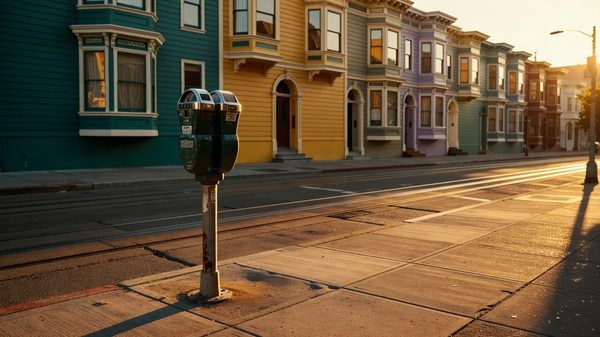
San Francisco has quietly solved one of the more irritating problems in urban driving: not knowing, until you arrive, whether there will be anywhere to put the car. The SFMTA now lets drivers reserve a space in most city-owned garages up to six months in advance, and the service went citywide in May 2026 after a pilot that began in August 2025 at the Civic Center and Performing Arts garages.
If you drive into San Francisco for anything scheduled — a medical appointment, a court date, a show at the Opera House, a dinner reservation, a flight out of a garage-adjacent shuttle — this changes the calculation meaningfully. Here is how it actually works.
The Basics
Reservations are available at 18 locations across the city-owned garage portfolio, which totals 22 garages. You book online, choose an arrival and departure window, and pay at the time of booking.
The credential is a QR code. You can hold it in Apple Wallet or Google Wallet, show it from the confirmation email, or print it in advance. That last option is worth noting for anyone who has watched a phone screen fail to scan in a poorly lit garage entrance — printing it is not old-fashioned, it is a hedge.
Pricing is the part most people underestimate. City-owned garages generally run 30% to 40% cheaper than private lots in the same neighbourhoods, and the Civic Center and Performing Arts garages carry special flat-rate event pricing. For an evening at the symphony or the opera, the combination of a guaranteed space and an event flat rate is a genuinely better deal than circling.
Where You Cannot Reserve
Not every city garage participates, and the exclusions are specific.
Reservations are not available at the 16th & Hoff garage, the Pierce Street garage, or the Kezar Lot. SFMTA has indicated that Japantown, Portsmouth Square, and Music Concourse will be added, so anyone planning around those should check current availability rather than assume either way.
The practical implication is that the neighbourhood you are going to determines whether this tool is available to you at all. Check the specific garage before building a plan around a reservation.
The Account Question
There is one asymmetry in the system worth knowing before you book, because it is not obvious at the point of purchase.
You can reserve as a guest or with an online account. Cancellation terms differ: account holders can cancel up until the reservation start time with no penalty. Guests do not get the same flexibility.
For a one-off booking on a fixed date, guest checkout is fine. For anything where plans might move — a medical appointment, a meeting that could reschedule, a trip with a variable return — create the account. It costs nothing and it converts a non-refundable purchase into a cancellable one. This is the single highest-value piece of advice about the system and it is buried in the terms.
What Six Months Actually Buys You
The six-month window is longer than most drivers will ever need, and its real value is in a narrow set of cases.
Event parking is the obvious one. If you buy symphony tickets in September for a February performance, you can lock the garage at the same time, at the event flat rate, before the night sells out.
Recurring appointments are the underrated one. A course of medical treatment, a weekly class, a standing meeting downtown — these can all be booked as a block, which removes a recurring source of stress and cost variability.
High-demand dates are the third. Any evening when a large event lets out near a garage is a night when arriving without a reservation is a gamble, and those dates are knowable well in advance.
For ordinary daily use, the six-month horizon is irrelevant and the value of the system is simply the guarantee — book the morning of, arrive, drive in.
How It Fits With SFMTA’s Other Payment Changes
The reservation system arrived alongside a broader move toward paperless payment across city garages and meters. The relevant point for drivers is that the reservation is a prepaid, pre-authorized transaction: the payment happens at booking, not at exit, so the garage exit is a scan rather than a payment.
That means the reservation and the meter apps are separate systems solving separate problems. A mobile payment app handles a meter or a drive-up garage stay. The reservation system handles a guaranteed space at a known price on a known date. Drivers who use both should not expect one to show the other’s transactions.
The Honest Limitations
Three things temper the enthusiasm.
A reservation is a space, not a specific space. You are guaranteed entry and a spot, not a particular level or bay, and not a spot near the elevator. For accessible parking needs specifically, confirm availability arrangements with the garage directly rather than relying on a general reservation.
Arrival windows matter. The reservation is tied to a time window. Arriving materially early or leaving materially late can incur additional charges under the standard rate structure, which erodes the price advantage. Book the window you will actually use, with realistic margins.
Coverage is partial and shifting. Eighteen of twenty-two garages, with three more pending, means that at any given moment there are neighbourhoods where this does not help. It is a good tool, not a universal one.
The Practical Takeaway
If you drive in San Francisco with any regularity, create the online account now rather than at the moment you need it, and check whether the garages near the places you actually go are among the eighteen. That five-minute exercise turns this from a service you have heard about into one you can use on the day you need it.
And for anything with a date attached — an appointment, a performance, a flight — book the garage when you book the thing. City garages are cheaper than the private alternatives, the space is guaranteed, and the version of the evening where you spend twenty minutes circling was never the good version.